GET 10% OFF the base price of all our buildings! View our inventory or design your building now!
Cheap vs. Inexpensive Sheds: How to Find a Quality Shed Within Your Budget

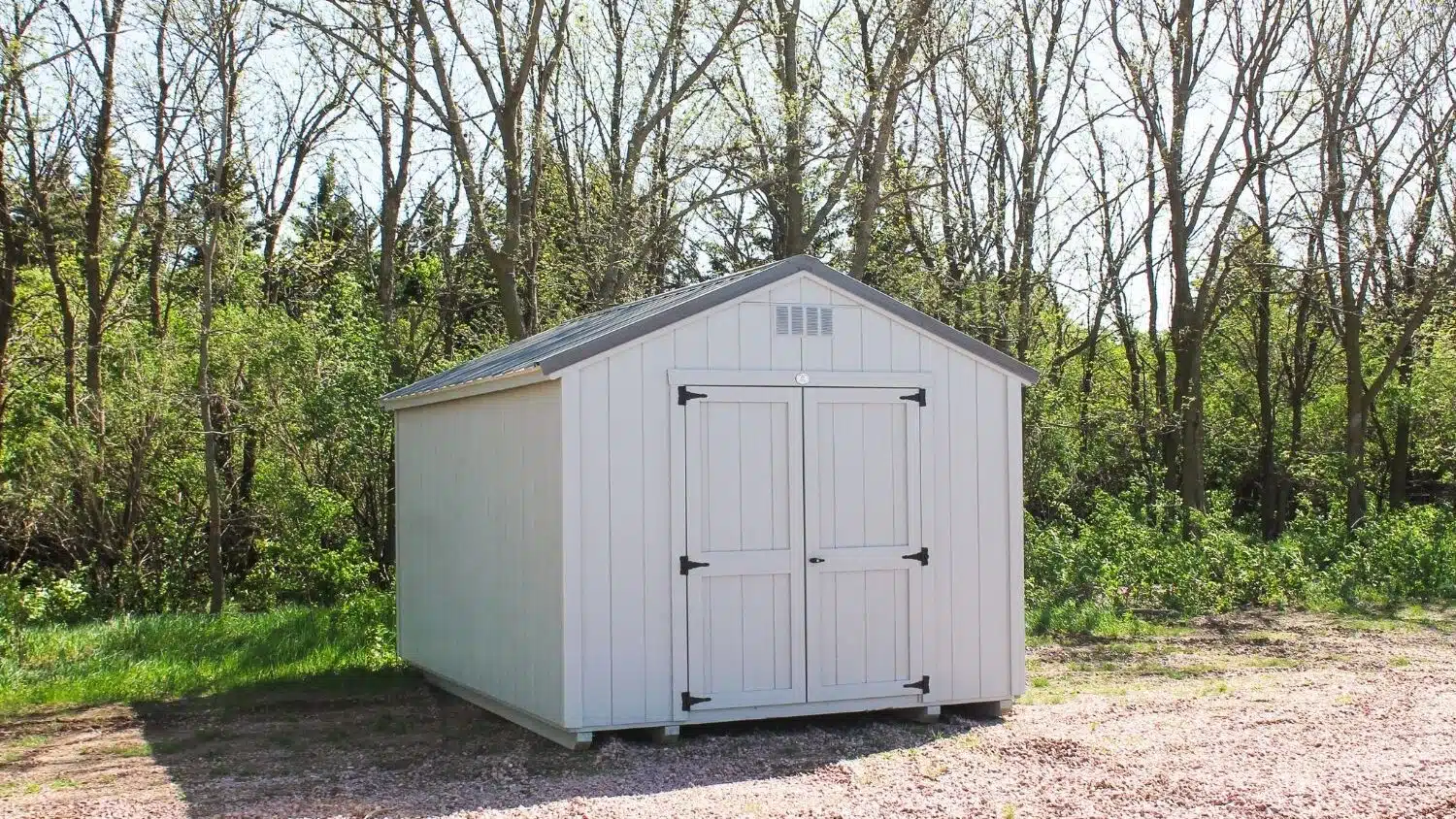
There are many terms floating around that can help you find an affordable shed. When searching, you’ll stumble across cheap, inexpensive, budget, low-cost, and economy sheds for sale. The challenge is understanding what those terms say about the price, construction, and features you can expect.
It’s important to understand the difference between a lower-priced shed and one that provides dependable storage at a reasonable cost. As shed builders, we know where careful trade-offs can lower the price and where cutting costs could limit a building’s usefulness. This guide will help you search for the right shed, compare the trade-offs, and calculate the total cost before buying.
What Do “Cheap,” “Inexpensive,” and “Economy” Mean?
Shed sellers use several terms to describe lower-priced buildings, but what do “cheap,” “inexpensive,” and “economy” actually mean? These terms are not official construction grades, so compare the specifications before deciding which shed offers the best value.
Cheap Sheds
“Cheap” often means the lowest-priced shed, but it can also suggest weak construction or limited durability. A low advertised price may exclude essential features or services, so compare more than the initial price.
Inexpensive Sheds
This is usually a stronger sign of a shed that strikes that balance between affordability and quality. An inexpensive shed is usually one that isn’t at a higher price point but still includes essential features that will make your investment last.
Budget Sheds
A budget shed is any shed that falls within your spending limit. The term does not specify a cost or describe construction quality, so review the materials, included features, and the complete project cost.
Economy Sheds
Economy sheds are intentionally designed to be less expensive. Builders may use standard designs, wider framing spacing, basic finishes, fewer features, or limited customization while still meeting the construction requirements for the intended use.
1. Use the Right Search Terms to Find Affordable Sheds
Using the right combination of search terms allows you to find a shed that matches your needs and budget. Combine the intended use, ideal size, material, location, and one of the affordability terms above.
For example, you might search for:
- 8×8 economy shed for sale near me
- Budget shed for a riding mower
- Inexpensive wood storage shed with delivery
- Low-cost prebuilt shed in [location]
- Economical storage sheds near me
These searches provide more useful options than a broad phrase such as “cheapest shed near me.”
Next, we’ll help you define your intended use, size, materials, and essential features so you can create a more focused search.
2. Define Your Shed’s Intended Use
How you plan to use your shed can tell you a lot about the size and features you need. As a shed builder, we most commonly see people use sheds for:
- Storage
- Home Office
- Fitness Studios
- She-Sheds/Man Caves
- Art/Music Studios
- Pool Houses
Basic storage may only require secure, weather-resistant space. A home office, fitness studio, or hobby space may require electrical service, insulation, finished walls, additional windows, or climate control. Your intended use may also affect the required foundation and permits.
Defining the use helps you separate nonnegotiable features from upgrades you can reduce, postpone, or skip. A home office may need electricity and insulation, while a storage shed may not need either. This gives you a clearer idea of where you can save without limiting the shed’s purpose.
With your intended use and non-negotiables defined, you can determine how much space they require so you get the right size without overspending.
3. Choose the Right Size Without Overbuying
Start by measuring your equipment, seasonal decorations, and anything else you plan to keep inside. This gives you a practical starting point for choosing the shed’s dimensions.
Measure equipment, seasonal decorations, or anything else you plan to keep inside. Account for additional space to move around, add shelving or workbenches, and accommodate future storage needs. Be sure to consider your property’s size and any local size or setback requirements that may influence the shed size you can have.
Once you’ve accounted for everything you need space for, you can choose the right shed without paying for more room than you need. Remember, a smaller shed usually costs less, but buying one that is too small could limit its usefulness or lead to an earlier replacement.
4. Decide Which Features Are Essential
The features you need will vary based on the shed’s intended use, but start by reviewing these essential components:
- Floor system and weight capacity
- Secure doors
- Ventilation
- Roofing
- Framing
- Siding
Other features like electricity, plumbing, trim, custom paint colors, shelving, workbenches, or extra windows and doors are generally considered upgrades.
That being said, how you plan to use the space can determine which features are needed and which are not. A home office likely needs electricity to charge your computer, and a workspace likely needs a workbench for your projects.
Determine what is essential for you so you understand which features you’re willing to compromise on for a lower price and which are nonnegotiable. You should also ask which upgrades will be difficult or expensive to add later.
5. Understand the Tradeoffs of Economy Shed Construction
Builders can lower the price of an economy shed by using wider framing spacing, shorter walls, smaller overhangs, simpler material packages, fewer included features, or limited customization. The exact tradeoffs vary, so ask the builder to identify the construction differences between its economy and standard models.
At Quality Storage Buildings, we can speak most confidently about our own sheds. The table below highlights the construction differences between our Priceline Economy Sheds and standard sheds.
Priceline sheds use 2×4 wall framing spaced 24 inches on-center, while our standard sheds use 16-inch on-center spacing. The wider spacing uses less lumber and lowers the price, but provides fewer studs for heavy shelving or interior finishes.
That tradeoff can be worthwhile for basic storage. Some customers have told us their Priceline sheds have remained in use for more than 10 years. Closer framing may be worth the added cost when you plan to install heavy shelving, finish the interior, or use the shed as a workshop or occupied space.
Focus on the differences that affect your plans. A simpler economy model can provide better value when you do not need the added construction or features of a standard shed.
6. Compare Shed Materials and Buying Options
There are other ways to reduce costs. The material, construction method, and buying option you choose can all affect the final price.
Common shed materials include:
- Wood
- Metal
- Resin
- Vinyl
Each of these has tradeoffs in overall cost, required maintenance, durability, and customizability. Consider both the initial price and the upkeep each material may require over time.
There are also several ways to buy a shed:
- Prebuilt sheds
- Sheds constructed on-site
- Shed kits
- DIY sheds
- Used or repossessed sheds
In our experience, prebuilt delivery is often the more affordable and convenient option when the property has enough access. On-site construction can accommodate larger buildings or locations that a delivery crew cannot reach.
Kits and DIY projects may reduce labor costs but require tools, time, and construction knowledge. Used or repossessed sheds may cost less upfront, but relocation, repairs, setup, and limited warranty coverage can reduce those savings.
You can also choose between rent-to-own and traditional financing options for added financial support. Compare the total amount paid under each option rather than focusing only on the monthly payment.
7. Research Shed Sellers and Available Models
The most crucial step to getting the shed you want at a price within your budget is knowing where to look and what to look for. If you’re in the local area, we’ve put together a list of the top shed companies in South Dakota.
If you’re in one of our other service areas, including Minnesota, Iowa, or Nebraska, or another state, here’s what to look for:
- Clear construction specifications so you know what you’re getting for the price
- A diverse range of shed styles, materials, and customization options that give you control over the final cost
- An economy, Priceline, or budget shed option that reduces nonessential features instead of cutting the quality needed for its intended use
- Warranties available to protect your investment
- Clear delivery areas, charges, and site access requirements
- Financing options like rent-to-own or traditional financing, with clearly explained terms and total costs
- Online reviews that discuss construction quality, delivery, communication, and support after the sale
A good shed company should be able to explain why one model costs less, what tradeoffs were made, and how those differences affect your intended use. If the seller cannot provide those details, it becomes difficult to judge the value behind the price.
8. Consider Hidden Shed Costs
We often find that our customers incur costs for shed projects they did not expect or include in their initial budget. Here are some things to look out for:
Site Preparation
Your shed should have a foundation and level ground to be placed on. There are foundation options available at various price points, but a sturdy, supportive base helps your shed stand the test of time.
Site preparation can incur additional charges if the location is difficult for the delivery driver or builder to access or requires extra work. Grading, drainage improvements, vegetation removal, and limited equipment access can all affect the cost.
We cover how that works for us on our site preparation page. Always ask the shed builder what preparation is required and who is responsible for completing it.
Here’s a quick look at common foundation options and their relative price ranges:
| Foundation option | Relative cost | Best suited for | Important considerations |
| Ground placement with shims | $ Lowest | Smaller sheds and limited budgets | The shed can be leveled with shims, but direct ground placement provides less drainage and long-term stability. |
| Leveled crushed rock or gravel base | $$ Moderate | Most small and midsize sheds | A 1- to 3-inch base of ¾-inch crushed rock or gravel supports drainage and helps the shed remain level. This is our recommended option for most sheds. |
| Concrete pad | $$$ Highest | Larger sheds, heavy equipment, and permanent uses | A concrete pad provides strong, stable support but requires more preparation, materials, and labor. |
Delivery vs. On-Site Construction
Typically, if you buy a shed, there are two options outside of kits or DIY projects: prebuilt delivery or on-site construction.
Delivery is often the more affordable option. We recommend finding a local builder, as some include free delivery within a nearby service area, while companies farther away may charge by the mile. Ask what the delivery price includes and how far the free delivery area extends.
On-site construction is usually more expensive and time-consuming. It is commonly used for properties with difficult access or for larger, more complex, and highly customized sheds. If free delivery is available and your property has enough access, taking advantage of it can help you avoid added costs later.
Permits
Depending on your shed’s size and local requirements, you may need a permit and be responsible for related fees. Permit rules are typically set at the city or town level, so contact your local building or zoning official before buying your shed.
If you live in South Dakota or Nebraska, we recommend starting with our permit guides. They can help you find local requirements, available fee information, and the appropriate contact for questions.
3. Calculate the Total Shed Project Cost
In general, you can calculate the total cost of your shed project using this formula:
- Total cash cost = shed price + upgrades + site preparation + foundation + permits + delivery + installation + taxes and fees
You can also calculate how traditional financing and rent-to-own will affect the overall cost:
- Total financed cost = total cash cost + interest + financing fees
- Total rent-to-own cost = initial payment + total scheduled payments + contract fees + separately paid project costs
Separately paid project costs may include site preparation, the foundation, permits, delivery, installation, taxes, and upgrades that are not included in the agreement.
Because upgrades, site conditions, permits, delivery, and taxes vary, a general pricing example may not reflect the cost of your project. We recommend submitting a quote form or using our 3D builder to estimate the cost of the shed and selected upgrades. You can then add any local costs that are not included.
10. Compare Quotes and Identify the Best Value
The best way to get an accurate estimate for your project is to request quotes from different shed builders. Compare the construction, included features, warranties, added costs, and payment options in each quote.
Make sure you are comparing sheds with similar sizes and specifications. The best value is not always the lowest price. It is the option that fits your budget without sacrificing the longevity, essential features, or construction quality you need.
Choosing the Right Shed: A Quick Checklist

Use these questions to compare your options:
- What will I store or do inside the shed?
- How much space do I need now and in the future?
- Which construction features and upgrades are essential?
- Am I comfortable with the tradeoffs that lower the price?
- Does the seller clearly explain the construction, warranty, and included services?
- What site preparation, foundation, and permits will I need?
- Are delivery, setup, and installation included?
- What is the complete cash, financed, or rent-to-own cost?
- Which quote offers the best long-term value for my needs?
Complete Your Shed Purchase

Before signing, get the shed specifications, included features, final price, payment terms, site preparation requirements, and delivery responsibilities in writing. Make sure the foundation will be ready, and the delivery crew can access the site before the scheduled arrival.
Inspect the shed after delivery or construction. Check the roof, siding, floor, doors, windows, paint, and ordered features. Photograph any damage or incomplete work and report it promptly. Keep your contract, receipt, warranty paperwork, and care instructions for future reference.
Conclusion: Focus on Value, Not Just the Lowest Price

When you are trying to stay within a budget, it can be tempting to choose the first shed with the lowest price. But shed buying is a balancing act. A poorly built shed could require costly repairs or an early replacement, while a more expensive shed may include features you do not need or payments you cannot comfortably manage.
The goal is to find a shed that fits your budget without compromising on the features and construction your intended use requires. Our Priceline Sheds provide a good example. They use 24-inch on-center framing to help lower the price, and some customers have told us their Priceline sheds have remained in use for more than 10 years.
If you need a shed builder who is transparent and will walk you through your options, contact us. Quality Storage Buildings was founded on the principle that we would not sacrifice quality while helping people get the storage space they need.
You can use our 3D builder to customize a shed for your needs while choosing budget-friendly features that help control the final price. Our team is also happy to help you find the right fit for your needs and budget.

Start With A Building That Fits Your Property
Customize your shed, garage, cabin, or portable building in 3D and explore layouts, upgrades, and pricing with confidence. Need something sooner? Browse in-stock inventory available for quicker delivery across the Midwest.